Pillar guide
Eliminating Repeat Slack Questions: Onboarding New Hires Through Your SOP Library
How agencies cut repeated 'how do I…?' questions and get new hires productive faster, with a week-one plan, answer-with-a-link habits and AI answers grounded in your own SOPs.
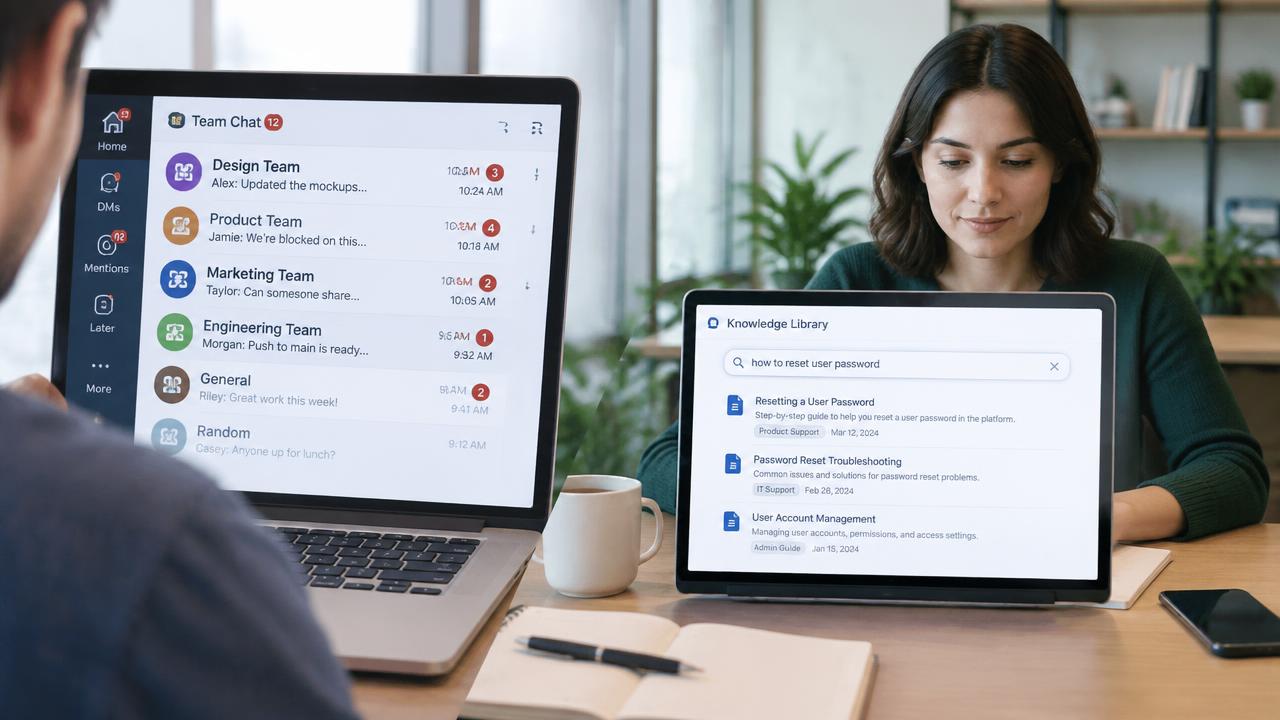
If your senior people spend an hour a day answering the same questions, you are paying senior rates for a search engine. Repeat questions are a symptom: the answer exists, but it's hard to find or hard to trust. New hires feel it most, and so do the people they interrupt. This guide covers how to measure repeat questions, how to build a week-one onboarding path from your SOP library, and the habits and tools that keep questions from coming back.
01
Measure the problem first
For two weeks, ask leads to tag process questions in Slack with an emoji. At the end, group them. Most agencies find 10–15 questions make up the majority, and most of those already have an answer somewhere.
Question log
Question | Asked by | Times asked | Answer exists? | Where
How do I request ad account access? | New AM | 4 | Yes | Old Drive doc
What's the report send date? | Designer | 3 | No | —
Where are brand files for [client]? | Writer | 5 | Yes | Client folder
02
Turn every answer into an SOP or a link
Adopt one rule: if a process question gets answered in chat, the answer is a link to an SOP. If no SOP exists, the person answering creates a short draft — in Cloopp, 'Draft with AI' turns a few notes into a structured procedure for review.
Within a month, the most common questions all have a single link.
Before
- • Senior AM types the same answer again
- • Answer disappears in chat history
- • Next hire asks again
After
- • Reply is a link to the approved SOP
- • Answer is searchable forever
- • Next hire finds it before asking
03
A week-one plan for new hires
New hire onboarding is the best test of your library. If someone can complete week one using SOPs, the library works.
- 1Day 1: accounts, tools and the 'how we work' SOP; tour of the library.
- 2Day 2: read the five most-used SOPs for their role; ask questions in one thread.
- 3Day 3: shadow one real task while following the SOP.
- 4Day 4: perform a task alone using the SOP; a lead checks with the verification step.
- 5Day 5: suggest one improvement to an SOP that confused them.
04
Let people ask in plain language
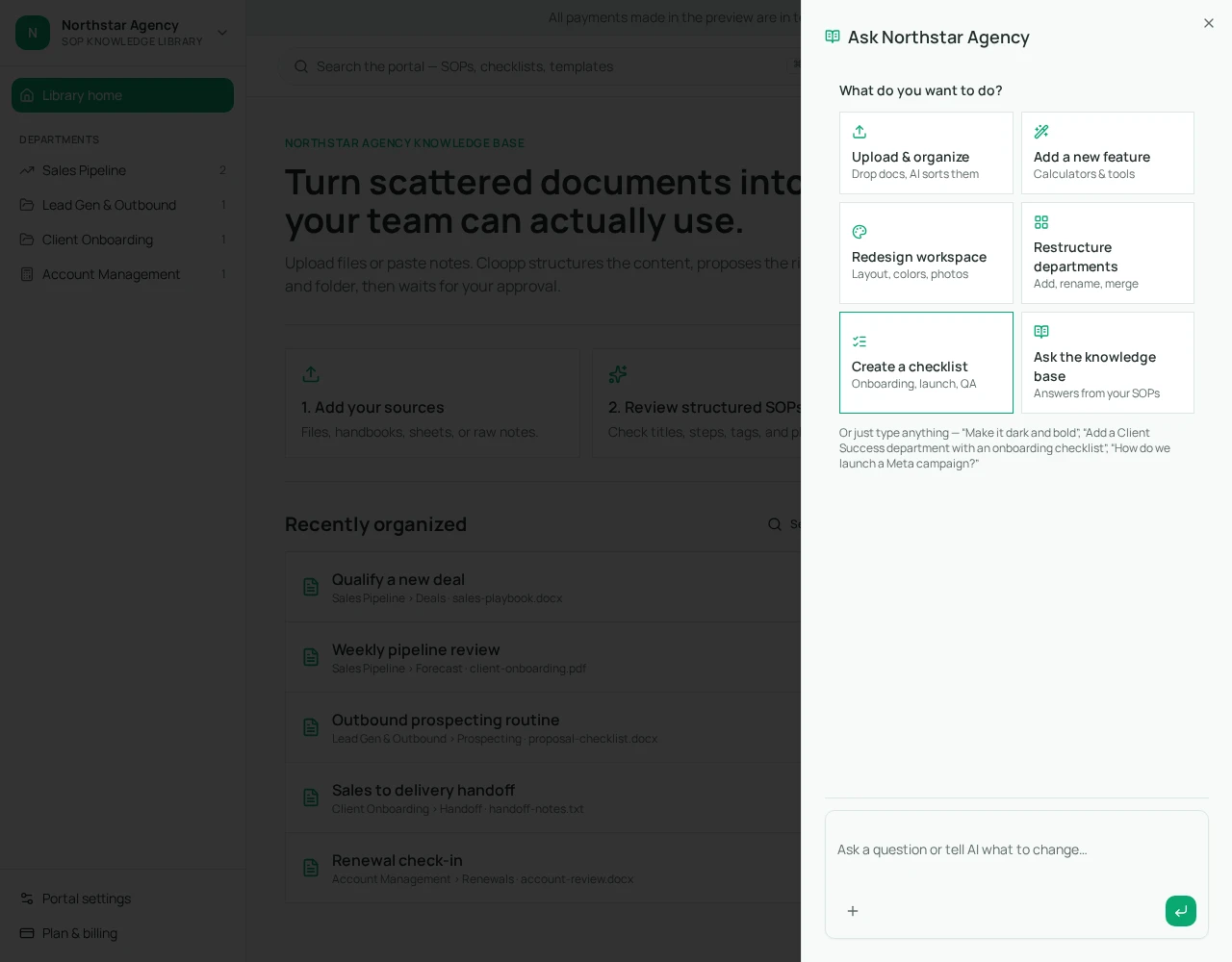
Not everyone knows the name of the SOP they need. Cloopp's search covers titles and content, and Ask AI answers questions like 'how do we set up a new Meta ad account?' using your approved procedures and links to the source.
Because answers come from your own SOPs, the advice matches how your agency works. When there's no SOP, that's your signal to write one.
05
Make the library the front door
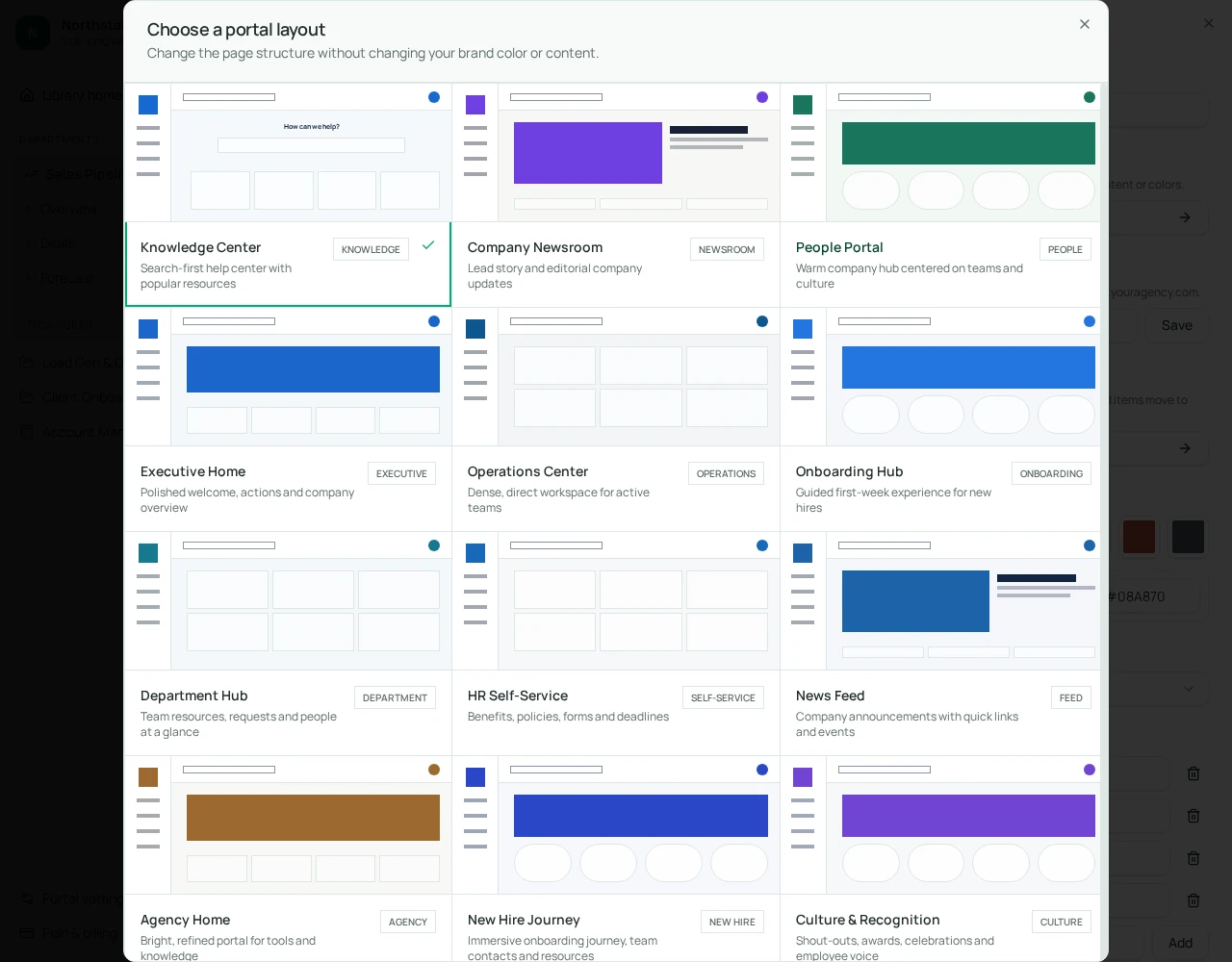
Your workspace home should show what each role needs first: departments, popular SOPs, key links. Cloopp lets you choose a layout and brand it with your logo and colours, so it feels like the team's own portal, not another tool.
Frequently asked questions
- How do we stop people asking instead of searching?
- Answer every process question with a link, never a typed explanation. People quickly learn the library is faster.
- Does Ask AI cost credits?
- Yes, each Ask AI run uses one credit. Searching and reading SOPs is always free.
Put it into practice
Give your team one place to look
Build a library your new hires can learn from on day one, and let Ask AI answer from your own procedures.
Explore free templates