
Content operations
Brand Voice Onboarding for New Copywriters: Rules, Examples, and Review
Translate a client’s brand guidelines into usable writing decisions, approved examples, and a first-draft review workflow—with a sample voice matrix.

“Friendly but professional” appears in countless brand guidelines, yet two writers can produce completely different drafts from it. One uses jokes and emojis; the other writes cautious corporate prose. Voice onboarding needs observable choices and examples, not more adjectives. This guide turns an approved client guideline into a practical writing reference and review procedure, using a fictional business software brand and Cloopp’s structured SOP library.
01
Translate adjectives into editing decisions
Start with the approved brand guideline and recent content the client considers successful. For each adjective, ask what a writer should do differently in a sentence. “Clear” might mean name the action before the benefit. “Confident” might mean use direct language without overstating evidence. “Human” might mean acknowledge the reader’s difficulty without inventing personal experience.
Ask the client owner to confirm the examples. A writer’s preference is not the brand’s rule, and an AI-generated sample is not automatically an approved example. Keep factual claims, regulated language, and proof requirements distinct from tone. A sentence can sound perfect while making an unsupported promise.
02
Step 1: Build a small voice matrix
For the fictional software brand, use three rules: lead with the operational problem, explain the next action simply, and make only supported claims. Add vocabulary preferences and a few prohibited phrases where they matter. Do not compile a huge synonym list that forces writers to inspect every word.
Use before-and-after examples drawn from authorized material or clearly labeled illustrations. “Our platform transforms everything” becomes “Create one place for your team’s current procedures.” The second sentence narrows the claim and makes the outcome understandable without pretending to guarantee adoption or business results.
Voice matrix to adapt
Trait: Clear
Do: State the action and object
Avoid: Abstract promises without a next step
Example: “Open the reporting checklist” not “Activate reporting excellence”

Trait: Confident
Do: Explain supported capabilities
Avoid: Guaranteed outcomes or invented customer results

Trait: Human
Do: Recognize the reader’s real constraint
Avoid: Forced humor or fictional personal stories
Approval owner: [client/account role]
03
Step 2: Create the writing reference in Cloopp
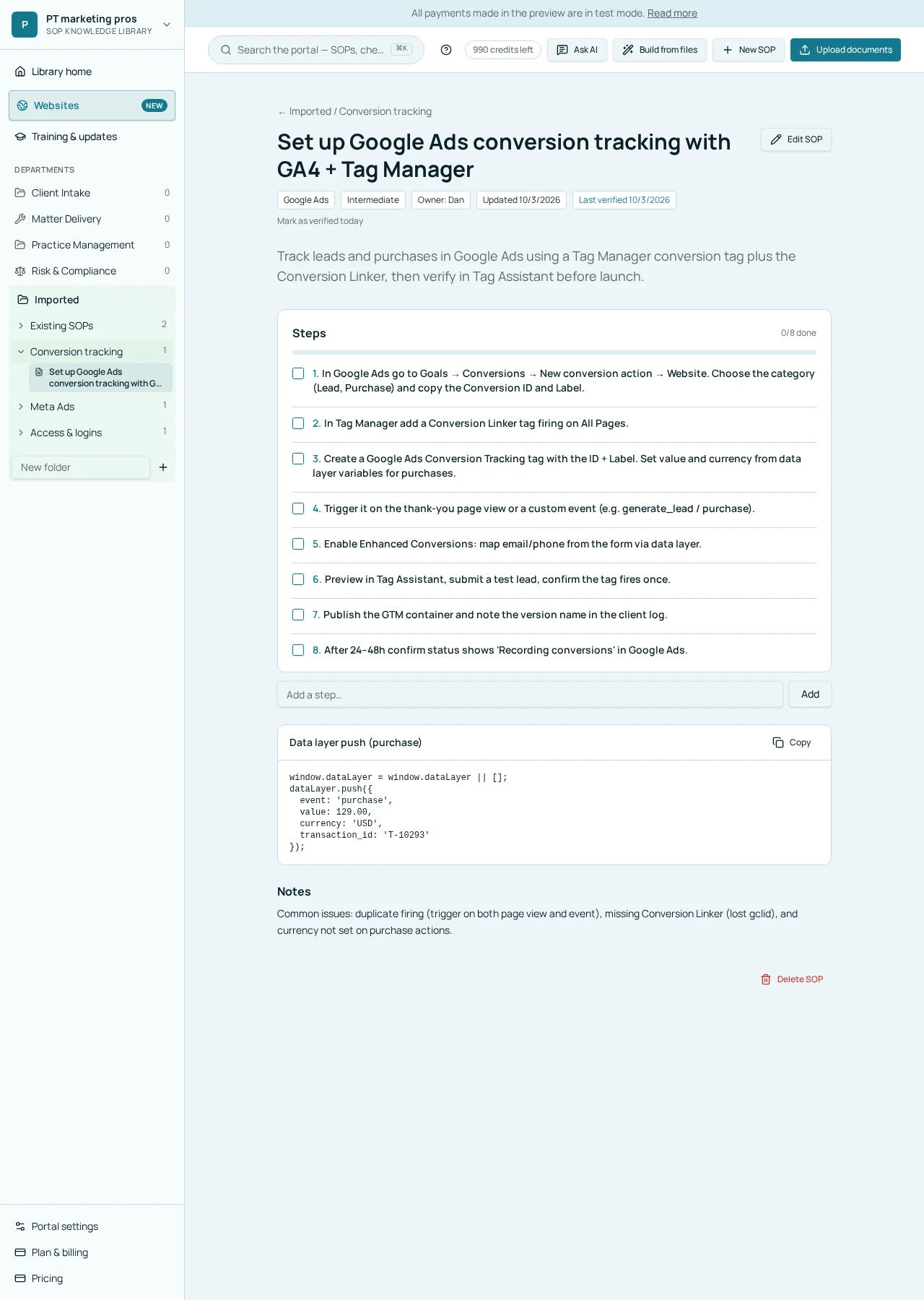
Use a dedicated client workspace when the material should not be visible to other clients. Create or import a procedure such as “Apply the client’s voice before submitting a draft.” The objective names the audience and channels covered; prerequisites link to current approved guidelines and examples.
In the draft review or Edit SOP, write the actual decisions the copywriter should make: inspect the brief, choose the relevant channel example, verify claims, edit tone, and run the final checks. Place supporting examples in Step instructions or Notes / body. Do not imply that the workspace automatically enforces tone or checks every factual claim.
- 1Gather authorized guidelines and three approved examples.
- 2Agree on observable voice rules with the client or account owner.
- 3Draft the reference procedure and place it in the correct client workspace.
- 4Inspect the full content before approval, including every example and claim.
- 5Have a new writer use it on a small sample, then refine the unclear rules.
04
Step 3: Review a sample before a live assignment
Ask the new writer to draft a short passage from a real brief using the voice matrix. The reviewer should identify the rule behind each edit instead of simply rewriting the passage. “This phrase overstates the evidence” teaches more than “the client would not like this.”
Separate voice revisions from strategic and factual revisions. If the brief lacks a clear offer or source, the writer cannot solve that with tone. Record recurring voice questions in the reference procedure; keep assignment-specific comments in the working document. A short sample can expose misunderstandings before a full draft consumes the budget.
Before
- • Three subjective adjectives
- • Reviewer rewrites without explanation
- • Each writer learns different private preferences
After
- • Observable decisions and approved examples
- • Edits linked to a stated rule
- • One reviewed reference for the team
05
Troubleshooting contradictory feedback and changing guidelines
If two client reviewers disagree, identify the authorized approver and consolidate the decision through the agreed review route. Do not encode both contradictory preferences as universal rules. Record channel-specific differences when they are real: a sales email and a technical help article may legitimately use different levels of formality.
If an AI draft imitates the tone but invents claims, remove the claims and strengthen the evidence prerequisite. AI can help structure supplied notes, but neither tone matching nor polished prose establishes truth. Keep customer quotes and results only when the client has authorized their use.
When the brand changes, update the current guideline links, examples, and SOP together. Ask the next writer to test the new reference and report unclear decisions. The goal is consistent reasoning, not identical sentences: writers should retain room to communicate naturally within the confirmed brand boundaries.
Frequently asked questions
- Can the SOP replace the client’s brand guidelines?
- Use it as the practical working reference and link to the approved guideline. The client’s authorized rules and decisions remain the source of truth.
- Does Cloopp automatically score brand voice?
- No automatic voice-scoring workflow is claimed here. The SOP supports a human drafting and review process.
Put it into practice
Give the next writer usable examples
Translate three voice traits into concrete decisions, approve the examples, and review a small sample before assigning the full draft.
Explore free templates